Understanding Why Your uPVC Door Handle Feels Stiff or Won't Lift
What Causes a Stiff or Non-Lifting uPVC Door Handle?
A uPVC door handle that feels stiff or refuses to lift is a common frustration. The direct reason is almost always a problem with the door's multipoint locking mechanism. When the handle becomes hard to operate, it signals that something inside the lock is binding, misaligned, or worn. For many homeowners, this issue appears gradually and can be traced to a few repeatable causes. The most typical culprits are a misaligned door, a seized lock cylinder, or debris inside the locking mechanism. Understanding these causes can help you decide whether a simple adjustment might solve the problem or whether professional help is needed.
How a uPVC Door Lock Works
A modern uPVC door uses a multipoint lock system. When you lift the handle, the lock pushes several bolts into the door frame at once. These bolts engage with locking keeps placed along the frame. This design gives much better security than a single-point latch. The handle is connected to a central gearbox inside the door. The gearbox translates the handle's movement into the simultaneous action of multiple bolts. If any part of this chain is blocked or misaligned, the handle will feel stiff.
Common Causes of a Stiff Handle
Door Alignment Issues
Over time, a uPVC door can sag or shift. This happens because the door's weight settles, the hinges wear, or the frame moves slightly. When the door drops even a few millimetres, the locking bolts no longer line up cleanly with their keeps in the frame. Lifting the handle then forces the bolts against the metal keeps, creating friction. The result is a stiff handle that may not lift fully. This is one of the most frequent reasons for a stiff handle and often can be fixed by adjusting the hinges.

Seized or Stiff Lock Cylinder
The lock cylinder is the part you insert the key into. If the cylinder becomes stiff or partially seized, it can prevent the handle from operating smoothly. This is especially common in older doors or those exposed to weather. A stiff cylinder may also make the key hard to turn. In some cases, the cylinder itself is fine but the cam inside it that connects to the gearbox is worn or broken. If the handle feels normal until you try to lift it, and the key operation becomes heavy at the same time, the cylinder is worth checking.
Debris or Dirt Inside the Mechanism
Dust, grit, and dried lubricant can build up inside the gearbox or along the locking points. This debris jams the moving parts and makes the handle stiff. Regular cleaning and light lubrication can prevent this. However, using the wrong lubricant, such as oil-based sprays that attract dirt, can make the problem worse over time. A dry PTFE spray or graphite powder is usually safer for uPVC locks.
Worn or Damaged Gearbox
The gearbox inside the door is a mechanical unit with moving parts. After many years of use, these parts can wear down or break. A worn gearbox often causes the handle to feel loose, stiff, or to not lift at all. If the gearbox is the problem, the fix usually means replacing it. This is a job that requires disassembling the door and fitting a new gearbox that matches the original make and model.
Security Escutcheon Issues
An escutcheon is the metal plate that surrounds the keyhole or handle on the outside of the door. If this plate is fitted too tightly, or if the screws holding it are over-tightened, it can press against the lock cylinder or the handle spindle. This pressure creates extra friction. Similarly, a security escutcheon that is slightly bent can rub against the handle or key barrel. Loosening the screws slightly or repositioning the escutcheon often solves the problem.
How to Diagnose the Problem
Before calling a locksmith, you can do a few simple checks. First, try lifting the handle with the door open. If it moves freely, the issue is likely alignment. When the door is open, there is no resistance from the locking keeps, so a free-moving handle points to the door being out of alignment. If the handle is still stiff with the door open, the problem is inside the lock mechanism itself. This could be the gearbox, the cylinder, or debris. Next, check the key operation. Insert the key and try turning it. If the key is hard to turn, the cylinder may be the issue. If the key turns smoothly but the handle remains stiff, the gearbox or alignment is more likely. You can also look at the locking keeps on the door frame. If you see shiny marks where the bolts are rubbing, that confirms the door is not aligning properly.
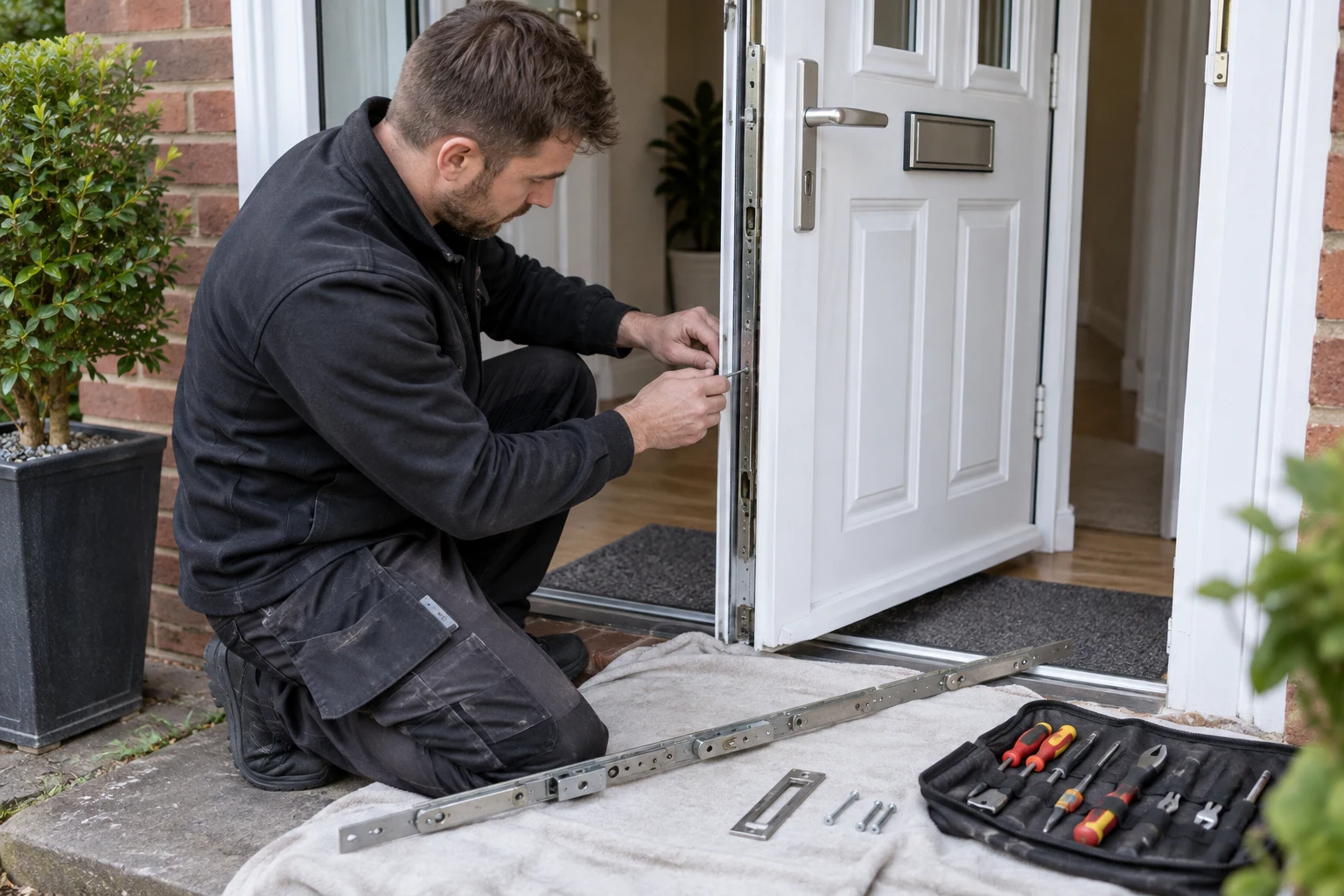
For those in Cannock and the surrounding areas, the team at arrivalocksmiths.co.uk often see these exact symptoms and can diagnose the root cause quickly. A professional can test the door, identify whether the fix is a simple hinge adjustment or a gearbox replacement, and carry out the work without damaging the door or frame. It is worth noting that forcing a stiff handle can break the gearbox or snap a bolt, which makes the repair more expensive. So if the handle is very stiff, stop using it and seek advice.
When to Call a Professional
Some causes of a stiff handle are straightforward to fix. Adjusting the door hinges to realign the door is a job many homeowners can attempt. The hinges on a uPVC door usually have adjustment screws that let you move the door up, down, left, or right. A few turns of a screwdriver can often solve an alignment issue. However, if the door has dropped significantly, or if the hinges are damaged, a professional adjustment may be needed. Problems inside the lock mechanism - a seized cylinder, a broken gearbox, or a damaged spring - are best left to a locksmith. These repairs require taking the door apart and fitting new parts correctly. Getting it wrong can leave your door insecure or unable to lock. For those who need a reliable repair, arrivalocksmiths.co.uk offers locksmith services across Cannock and within 25 miles. Their technicians are familiar with all common uPVC door lock brands and can replace cylinders, gearboxes, or complete multipoint lock systems.
How to Prevent Future Problems
Prevention is often simple. Keep the locking mechanism clean and use a dry lubricant once or twice a year. Avoid using oil-based sprays as they attract dust. Check the door alignment periodically. If you notice the handle becoming slightly stiffer over time, address it early before it leads to a breakdown. Also, be careful not to slam the door. Slamming can knock the door out of alignment and jar the gearbox. When fitting a new lock or cylinder, consider upgrading to an anti snap cylinder. These are designed to break in a controlled way if someone tries to force the lock, which protects the rest of the mechanism. Anti snap cylinders are also more durable and less likely to seize. For extra security, a high security escutcheon can protect the cylinder from drilling and snapping attacks. Pairing a good cylinder with a sturdy escutcheon makes the door both more secure and more reliable over the long term.

Final Practical Advice
A stiff uPVC door handle is rarely a sign that the whole door needs replacing. In most cases, the fix is straightforward and affordable. The key is to identify the cause accurately. If the door is out of alignment, a hinge adjustment often does the trick. If the lock mechanism is at fault, a professional can replace the cylinder or gearbox without replacing the door. Ignoring the problem usually makes it worse, so it pays to act as soon as you notice stiffness. By understanding the common causes, you can decide whether to attempt a fix yourself or call a locksmith. Either way, a smoothly operating door handle is something you can get back with the right approach.